Translate Into Your Native Language...

Wednesday, 29 March 2017

NASA ASSIGNS ASTRONAUTS TO FUTURE SPACE STATION MISSIONS


NASA has announced that veteran astronauts Joe Acaba and Ricky Arnold will launch on nearly six-month expeditions aboard the International Space Station starting in September and in March 2018, filling seats aboard Russian Soyuz spaceships recently acquired in a commercial arrangement with Boeing.
Acaba is set to launch first, riding to the space station inside the Soyuz MS-06 spacecraft from the Baikonur Cosmodrome in Kazakhstan in September with Russian commander Alexander Misurkin and NASA flight engineer Mark Vande Hei. That trio will be part of the station’s Expedition 53 and 54 crews, returning to Earth next February.
The mission will be Acaba’s third spaceflight since his selection as a NASA astronaut in 2004. The California native first flew in space aboard the shuttle Discovery on the STS-119 mission in March 2009, then spent four months in orbit on the International Space Station in 2012. Acaba has logged nearly 138 days in space on his two previous flights.
It will be Vande Hei’s first space mission, and the second for Misurkin.
Russian cosmonaut Alexander Skvortsov, NASA astronaut Scott Tingle and Japanese flight engineer Norishige Kanai are set to launch on the next Soyuz flight no sooner than late December. Those crew members were already assigned to the mission.
Astronaut Ricky Arnold will join NASA’s Drew Feustel and a Russian cosmonaut on a Soyuz launch in March 2018 as part of the station’s Expedition 55 and 56 crews. Born in Maryland, Arnold previously flew in space as a crewmate of Acaba on Discovery’s STS-119 mission, accumulating nearly 13 days in space.
Feustel, who was already training for his space station expedition, is a veteran of two space shuttle missions — the shuttle Atlantis’ servicing mission to the Hubble Space Telescope in 2009 and the final flight of the shuttle Endeavour in 2011. Next year’s mission will be the first long-duration spaceflight for Arnold and Feustel.
Acaba and Arnold will fill seats that were planned to be empty. Russia has reduced the size of its crew complement on the space station until a new research lab is launched to the complex next year to cut down on costs, training and staffing requirements.
Using Boeing as an intermediary, the U.S. space agency opted to take advantage of empty Soyuz seats on two flights scheduled for launch from Kazakhstan in September and in March 2018.
Boeing received rights to the Soyuz seats from RSC Energia, prime contractor for Russia’s human spaceflight program, in a settlement reached last year to end three years of litigation stemming from payments related to the companies’ former partnership in the Sea Launch program.
NASA said astronaut Shannon Walker, veteran of a five-month stay on the space station in 2010, will train as a “dedicated backup” for Acaba.
Rookie astronauts Nick Hague and Serena Auñón-Chancellor have also been assigned to space station missions, NASA said.
Hague, a colonel in the U.S. Air Force and a native of Kansas, will launch in September 2018 on a Soyuz ferry craft with two Russian cosmonauts for about a half-year rotation aboard the outpost. Auñón-Chancellor, a flight surgeon from Fort Collins, Colorado, will launch on a Soyuz booster in November 2018 with Canadian flight engineer David Saint-Jacques and a Russian cosmonaut.
Auñón-Chancellor is a member of NASA’s 2009 astronaut class, and Hague was selected as an astronaut in 2013.
NASA has reserved options to fly three more of its astronauts to the space station on Soyuz spaceships in early 2019 if U.S. commercial crew spacecraft in development by Boeing and SpaceX are not ready in time.

Once the CST-100 Starliner and Crew Dragon commercial spaceships are declared operational, the space agency plans to fly most of its astronauts on U.S. vehicles, while continuing to launch at least one U.S. crew member on each Soyuz mission. Russia plans to have at least one of its cosmonauts on each CST-100 and Crew Dragon capsule in an “in-kind” arrangement that does not involve any exchange of funds.

Tuesday, 28 March 2017

VIDEO GAME HOF FINALISTS NAMED

AP17086844529213_83518.jpg

ROCHESTER, N.Y. - The World Video Game Hall of Fame's 2017 finalists span decades and electronic platforms, from the 1981 arcade classic "Donkey Kong" that launched Mario's plumbing career to the 2006 living room hit "Wii Sports," that made gamers out of grandparents.
The hall of fame at The Strong museum in Rochester said Tuesday that 12 video games are under consideration for induction in May. They also include: "Final Fantasy VII," "Halo: Combat Evolved," "Microsoft Windows Solitaire," "Mortal Kombat," "Myst," "Pokemon Red and Green," "Portal," "Resident Evil," "Street Fighter II" and "Tomb Raider."
The finalists were chosen from thousands of nominations from more than 100 countries, said museum officials, who will rely on an international committee of video game scholars and journalists to select the 2017 class. The winners will be inducted May 4.
The class of 2017 will be the third group to go into the young hall, joining "DOOM," "Grand Theft Auto III," "The Legend of Zelda," "The Oregon Trail," "Pac-Man," "Pong," "The Sims," "Sonic the Hedgehog," "Space Invaders," "Tetris," "World of Warcraft" and "Super Mario Bros.," whose title character got his start in this year's "Donkey Kong" entry.
"What they all have in common is their undeniable impact on the world of gaming and popular culture," said Jon-Paul Dyson, director of The Strong's International Center for the History of Electronic Games.
The hall of fame recognizes electronic games that have achieved icon status and geographical reach, and that have influenced game design or popular culture.

THIS 240-ROCKET SEMI TRUCK MEANS BUSINESS

The Multiple Cradle Launcher has up to six times the firepower of other multiple rocket launchers.
Sometimes one or two rockets just won't do, and you need 239 or 240. That's the thinking behind the Jobari Defense Systems Multiple Cradle Launcher (MCL). Developed in the United Arab Emirates, MCL can ripple fire more than two hundred rockets at some unfortunate target, saturating an area with tens of thousands of lethal steel balls.
The MCL consists of an Oshkosh Defense 6×6 Heavy Equipment Transporter—known in the US Army as the M1070 HET. The M1070 is used by the Army to haul Abrams tanks, and towards that end has eight wheels and a 700 horsepower Caterpillar six cylinder turbocharged diesel engine.
The rest of the MCL is a 5 x 5 trailer with four rocket launcher cradles, each holding sixty 122-millimeter rockets. Once in position, the trailer lowers ten hydraulic stabilizers into place, securing the MCL against the recoil of firing. The fire control system is fully computerized, with the gunner able to select the number of rockets to launch. An internal navigation system and global positioning system for each of the four cradles aids in accuracy.
The MCL apparently uses TRB-122 122-millimeter rockets manufactured by Turkish defense contractor Rocketsan. A high explosive version has a point detonating fuse, while another version uses a proximity fuze to saturate the target area with lethal steel balls. Both rockets have a range of up to 22 miles at sea level. The MCL can ripple fire all 240 rounds in less than two minutes, or 8,640 pounds of high explosive and steel.
The MCL packs a lot of rockets into a single vehicle, up to six times more than other mobile rocket launchers. Placing all that firepower under the command of a single gunner simplifies command and control, and allows the gunner to plot the destruction of a very wide area.
But there are some downsides. The small warhead 122-millimeter warhead makes for a fairly small rocket with a short range and smaller payload—likely about 36 pounds of high explosive. The enormous size of the MCL, trailer and all, would make it hard to transport to distant battlefields. Based on a wheeled semi tractor trailer, the MCL probably has limited offroad capability, making it mostly road-bound.
Last month, Jobaria introduced the Twin Cradle Launcher (TCL), which carries two cradles each with four 300-millimeter rockets. These larger rockets, probably the Rocketsan TR-300 rockets, have both high explosive and steel ball warheads and a range of more than sixty miles.

Elon Musk Wants to Connect Computers to Human Brains

Elon Musk has made a habit of embarking on wild new endeavors. He wants to colonize Mars. He started work to bore a tunnel underneath the highways of Los Angeles on a whim. And now he wants to connect people's brains to computers.
According to the Wall Street Journal, Elon Musk is launching a new company called Neuralink to use "neural lace" technology to embed electrodes in people's brains. A neural implant device could allow humans to issue direct commands to computers just by thinking—firing neural signals and stimulating the device. Nerualink was registered as a "medical research" company in California last July, and according to the Journal, Musk plans on financing the company almost entirely by himself.As the Guardian points out, the move to start developing brain implant technology is likely in accordance with Musk's argument that humans will need to augment their abilities with machine technology to survive in a future dominated by artificial intelligence. At the World Government Summit in Dubai last month, Musk said that for humans to contribute to the future economy they will need to expand their capabilities through a "merger of biological intelligence and machine intelligence."
Neurological implants have been successfully used to allow amputees to control robotic prosthetics. There are some indications that Musk's Neuralink will attempt to expand the technology so that the human brain can receive inputs from a computing system as well, heightening intelligence or capability. More information should be available next week, and then Musk can start his masterplan to become a cyborg in earnest.

MICROSOFT TARGETS OFFICE PHONES WITH SKYPE FOR BUSINESS UPGRADES

With the latest Skype for Business upgrades Microsoft borrows features found in sophisticated office phone systems for its cloud-based communications platform.
Microsoft Skype for Business, Macs
Microsoft is making every effort to turn its Skype for Business enterprise video and voice communications software platform into a replacement for the office phone.
During the Enterprise Connect unified communications (UC) conference in Orlando, Fla. on Monday, the company announced several new updates and enhancements that support complex call management functions.
"This week, we're releasing Auto Attendant and Call Queues, two new advanced calling features in Skype for Business Cloud PBX," said Ron Markezich, corporate vice president for Office 365 Marketing at Microsoft, in a March 27 announcement.
Skype for Business Cloud PBX encompasses a suite of advanced private branch exchange (PBX) capabilities typically used in office environments and call centers. In the summer of 2015, the company took a major step in challenging traditional business phone systems with the addition of public switched telephone network (PSTN) calling support.
"Auto Attendant provides an automated system to answer and route inbound calls using dial pad inputs and speech recognition," continued Markezich. "Call Queues enable incoming calls to be routed to the next available live attendant in the order they are received."
For customers seeking more visibility into their calling activity for support purposes, Microsoft also announced a Skype for Business Online Call Analytics preview. Appearing as a new dashboard within the Office 365 administration console, it offers users insights into problems that may affect users' ability to conduct calls, like network or headset issues.
Microsoft is also tightening security on Skype for Business Online. New capabilities include certificate-based authentication, custom policies affecting mobile device use and client conferencing, as well as multi-factor authentication for PowerShell administration and management.
During the event, partner companies also introduced new services that integrate with Skype for Business.
Known for its SoundStation conference room speakerphones, Polycom introduced RealConnect for Office 365, a cloud-based service that links an organization's existing videoconferencing gear with Skype for Business Online.
Commercial audio, video and conferencing specialist Crestron introduced its SR for Skype Rooms System. Compatible with Crestron's audio-video and control systems, the integrated solution supports audio calls, high-definition video conferencing, content sharing and quick-join meeting features for remote attendees.
Unified communications management vendor IR added support for Microsoft Skype for Business Online to its Prognosis for UC product. IR Prognosis for UC is used by businesses and contact centers to monitor the performance of their communications environments and troubleshoot issues that may affect call quality and the overall user experience. It can be used to manage multi-vendor environments that include solutions from Cisco and Avaya.
A poor or inconsistent UC experience can stymie user adoption and slow down an organization's digital transformation efforts, asserted Kevin Ryder, chief marketing officer at IR, in a statement. "Ensuring end-to-end visibility across an entire UC ecosystem is critical and by extending Prognosis capabilities into Skype for Business Online, our customers gain valuable insights to identify and remediate issues quickly regardless if they exist on-premises or in the cloud."

SAMSUNG GALAXY S8: THE DISPLAY, THE CHIPSET AND THE CAMERA, HERE’S EVERYTHING WE HAVE ON THE FLAGSHIP

Samsung Galaxy S8: The display, the chipset and the camera, here’s everything we have on the flagship
One of the most anticipated smartphones this year will be coming from Samsung and the hype has never been this high.
The Galaxy S8 has seen its share of leaks and rumours in the past six months, and while everyone was expecting the smartphone to make an appearance at the Mobile World Congress this year, the company only left us with a teaser for an ‘Unpacked event’.
This is going to take place on 29 March, that’s tonight, at 8:30 PM.
The Korean tech giant is under a lot of pressure, ever since it had to deal with faulty batteries on the Galaxy Note 7 last year and eventually kill the device. This year, not only does it have to impress its loyalists but it needs to regain customer trust.
Now, let’s just give you all the details that we have gathered over the past few months around the Galaxy S8.
Availability and launch
First things first. Let’s talk about when we would actually see the smartphone officially. As mentioned above, the flagship smartphone never made an appearance at MWC, which we expected thanks to a couple of reports. Samsung did however tease us with a short video and announced an Unpacked event dated 29 March. Which means tomorrow we will officially get to see what Samsung has in store for us. If you are interested in the launch, click here to know more on how you can follow the announcement.
The smartphone will not be available immediately as it is expected to hit markets a month later, so somewhere at the end of April is when the smartphone will be available for purchase.
Design and renders
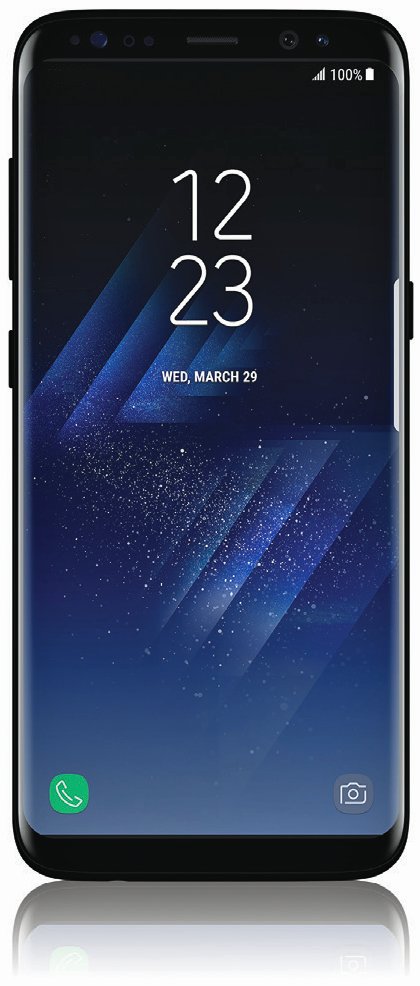
It all started with some rumours where a bunch of sources claimed that Samsung will launch the device with a 4K display, a dual-camera setup and support the S-Pen, since the Note 7 was killed. Others suggested that Samsung will ditch the 3.5mm audio jack as well. Then some renders popped up and eventually we saw the handset in a leaked image by case makers itself. Early renders suggested that Samsung will only have a curved-edged Galaxy S8 and will say goodbye to the flat design.
Boo!
It was rumoured that Samsung would also add the option for users to lower the resolution to Full HD and HD resolutions. This would be great to save some juice.
We also saw one extra hardware key which was and is still being speculated to trigger a digital assistant just like Siri or Google Assistant. Samsung has at least confirmed that it’s called Bixby. Some sources said Samsung would make the handset bigger this time around, in terms of display size, which could go up to as much as 6 inches.
Samsung Galaxy S8 Plus leaked render GSMArena 720
Image: MobileFun (YouTube)
Image: /Leaks
Early leaked images started to drop in where we saw the device with a display covering most of the front and no home or navigation buttons. A few days later, we saw yet another leak showing the back of the device which confirmed that Samsung would not indulge in a dual-camera setup and that it would place the fingerprint scanner right next to the camera rather than placing it below. Oh and the 3.5mm headphone jack appeared to be intact.
Image: @venyageskin1 (twitter)
Right after Samsung’s MWC (Mobile World Congress) press conference, we saw famous tipster Evan Blass tweeting an image of what is believed to be the real deal.